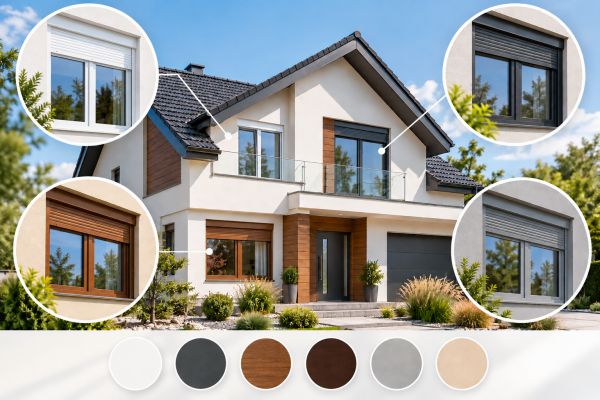
When choosing new windows, we pay attention to their appearance, the colour of the window profiles, the opening method, the type of glazing and, of course, the price. However, technical specifications also include various terms and symbols that may not be immediately clear to someone who does not work with windows and doors on a daily basis. One of the most important is the U-value (thermal transmittance). It indicates how much heat passes through a particular building element and is expressed in W/(m²K). Its interpretation is relatively simple – the lower the U-value, the better the thermal insulation of the building element.
For a complete window, the most important parameter is Uw (where “w” stands for “window”). This parameter indicates the thermal insulation performance of the entire window. It is particularly important in winter, when there is a significant temperature difference between the heated interior of the house and the outdoor environment. A window with good thermal insulation properties is more effective at reducing heat loss, helping to maintain a comfortable indoor temperature. This is why Uw is one of the parameters that is definitely worth checking before purchasing windows – especially if the energy efficiency of the building is a priority.
What does the U-Value mean for windows?
Uw, Ug and Uf – what is the difference between these parameters?
When browsing window offers, you may come across not only Uw, but also Ug and Uf. Although they look similar, they refer to different components of the window.
Ug indicates the thermal transmittance of the glazing, or more precisely, the entire insulating glass unit. Uf, on the other hand, refers to the window frame. Only Uw describes the thermal performance of the entire window, taking into account the glazing, the frame and the effect of the connection between them.
This is very important when comparing products. The fact that a particular glazing unit achieves a very low Ug value does not mean that the entire window will have the same value. The final result is influenced by many structural factors. These include the type and construction of the window profile, the glazing unit used, the spacer located between the panes of glass, and the ratio of the frame area to the glazed area.
The Uw value may also vary depending on the dimensions and configuration of the window. Therefore, when making a purchase, it is important to check exactly what the value presented by the manufacturer or seller refers to. If you want to assess the thermal insulation performance of the complete product, the Uw value is the most important information to consider.
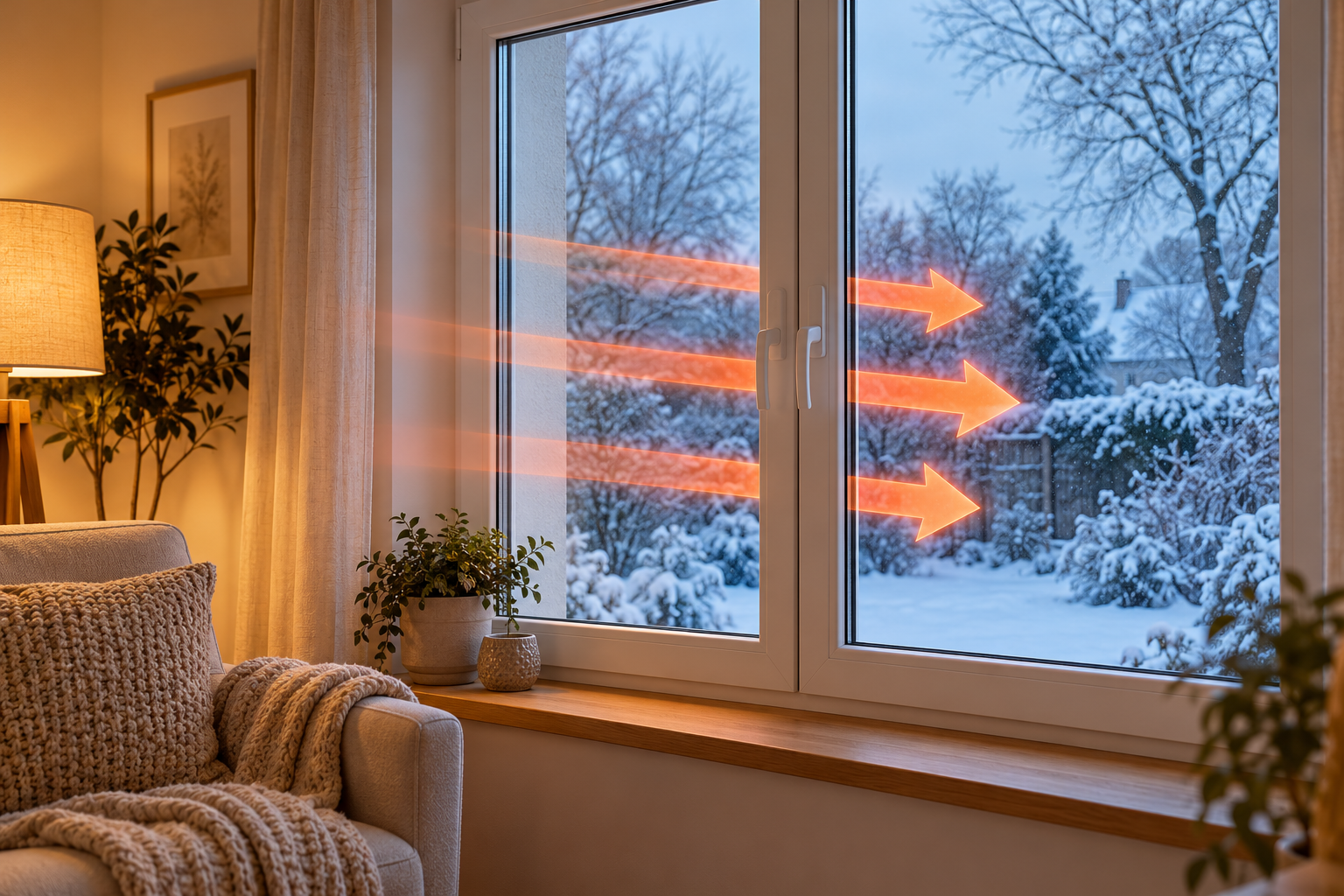
Heat transfer through a closed window
Why does a low Uw Value matter?
One of the reasons why the thermal performance of windows is so important is its role in reducing energy loss. During the heating season, we want heat to remain inside the house rather than escape through the building envelope. Windows form part of this envelope, so their performance affects the energy balance of the entire building.
The lower the Uw value, the less heat passes through the window. In practice, this can help maintain a more stable indoor temperature and reduce the amount of energy required to heat the rooms. This is particularly important in modern energy-efficient homes, where individual building components are selected specifically to minimise energy loss.
However, Uw is also worth considering when replacing old windows. Modern solutions – suitable profiles, multi-pane glazing units, low-emissivity coatings and warm-edge spacers – can provide significantly better thermal insulation than many older window constructions.
Good thermal performance also improves comfort when spending time near a window. Therefore, Uw is not merely a technical figure used by designers – it is a parameter whose effects can be experienced in the everyday use.
Does the lowest Uw always mean the best window?
Since a low Uw value indicates good thermal insulation, it might seem that all you need to do when buying windows is choose the product with the lowest available value. In practice, however, selecting the right windows is more complex.
Uw is an extremely important parameter, but it should not be the only aspect when purchasing windows. Depending on the location and characteristics of the building, other properties may be equally important. In a house located near a busy road, acoustic insulation will play a major role. In buildings that are particularly exposed to adverse weather conditions, it is worth paying attention to factors such as watertightness and resistance to wind load.
The properties of the glazing, security, the amount of natural light entering the rooms and the functionality of the window itself may also be important. What is more, even a product with an excellent Uw value will not perform as expected if it is installed incorrectly. Gaps or leaks where the frame meets the wall can lead to heat loss and reduced comfort.
Window selection should therefore be approached comprehensively: a good product, the right configuration and correct installation should form a complete system. Only then can the declared performance parameters of the windows translate into their actual performance in everyday use.
How to choose the right Uw Value when buying windows?
There is no single Uw value that can be considered ideal for every window and every building. Windows should be selected according to the nature of the project, the parameters of the entire building and the expectations of its users.
A newly built energy-efficient house may have different requirements from a building undergoing comprehensive thermal modernisation, while an apartment where several-decades-old windows are being replaced may require a different approach altogether.
When choosing windows, it is therefore worth checking not only the Uw value itself, but also the dimensions and configuration for which it has been specified. It should also be considered alongside the other performance parameters of the window.
However, the most important rule is easy to remember: the lower the Uw value, the better the thermal insulation of the entire window. This does not mean that customers have to analyse every symbol, table and piece of technical data on their own.
At Aikon Distribution, we help select windows to suit the needs of each individual project, taking into account factors such as the type of profiles, glazing, technical parameters, intended use and the desired appearance of the windows. As a result, terms such as Uw, Ug and Uf no longer have to be confusing abbreviations but can become useful information that helps customers make an informed choice and select windows that will perform effectively for many years.
You might also be interested in: